Growing Herbs on a Humid Balcony: What Thrives and What Bolts
The rosemary died first. It was a handsome plant, bought in a burst of optimism, set in a pretty glazed pot on our balcony, and watered faithfully every single morning. By July it was brown, limp, and smelled faintly of a damp basement. We loved it to death, which is a thing that happens a lot to herbs on the Gulf Coast.
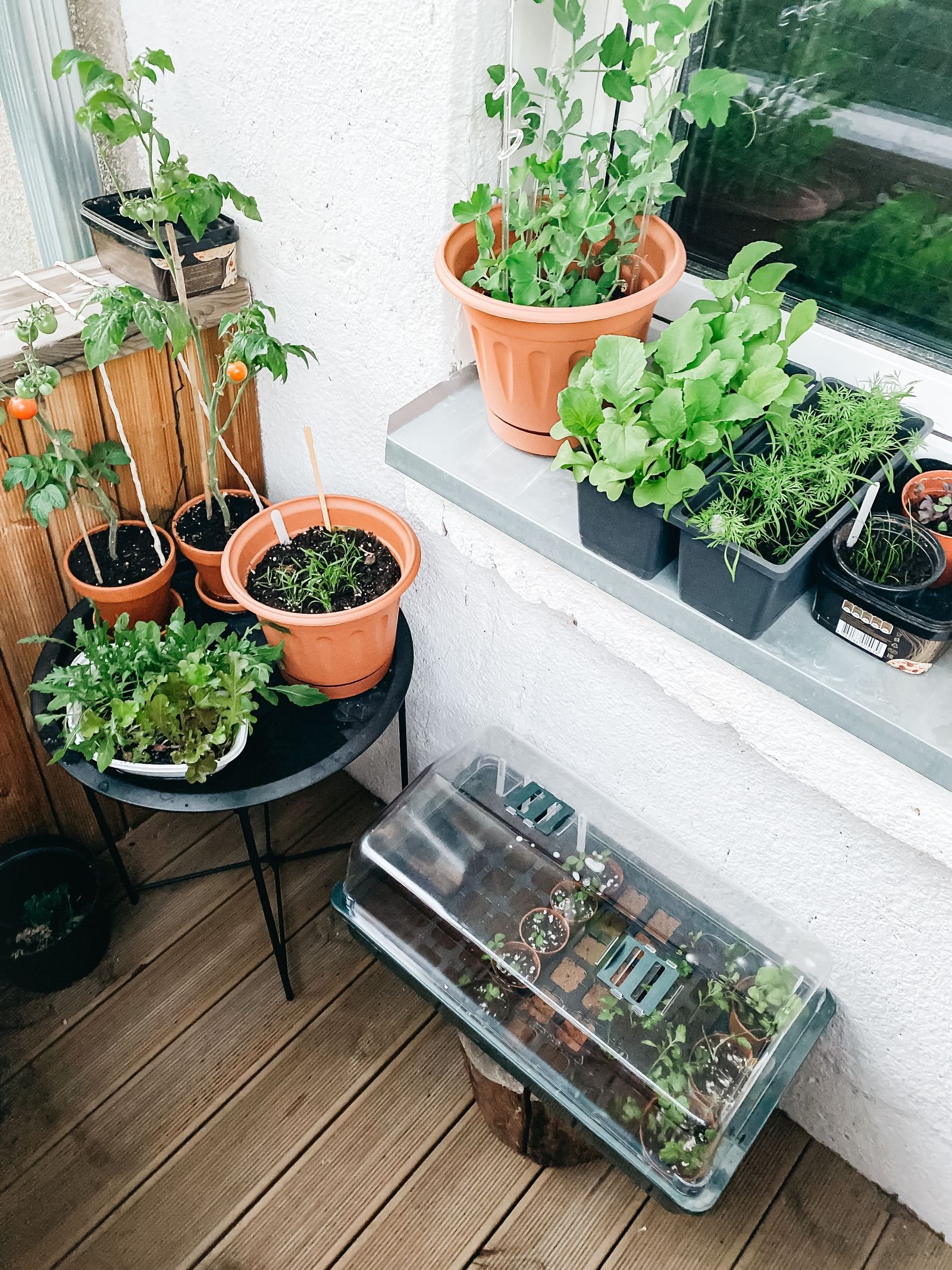
A few seasons and several replacement plants later, our small balcony garden supplies most of the herbs for recipe testing. It is not a big garden: a row of pots, a railing planter, and a watering can. Here is what we have learned about growing herbs where the air is warm and wet for much of the year.
Start with drainage, not seeds
Humidity means soil dries slowly, and summer downpours can soak a pot in minutes. Soggy roots are the most common way balcony herbs fail here, so every decision starts with getting water out of the pot.
- Every pot needs holes in the bottom. A decorative pot without them can hold a plastic nursery pot inside, but lift it out and drain it after rain.
- Use a potting mix made for containers, not garden soil, which packs down and stays wet.
- Empty saucers after watering or rain. Standing water also gives mosquitoes a place to breed.
- Raise pots slightly on small feet or blocks so water can escape freely.
- Give plants space. Moving air helps leaves dry, which discourages mildew and leaf spots.
Basil: easy, until it flowers
Basil loves heat, which makes it feel like a natural fit here. It grows fast in a sunny spot and can give you handfuls of leaves for months. Its weakness is flowering. When basil starts sending up flower spikes, it puts less energy into leaves, and the leaves it does make tend to get smaller and sharper in flavor.
The fix is regular harvesting. Snip each stem just above a pair of leaves. Two new shoots will grow from that spot, and the plant gets bushier instead of taller. If you see a flower spike forming at a tip, pinch it off right away. We harvest a little from every basil plant at least once a week, whether a recipe needs it or not. Extra leaves go into a sauce that day or get chopped and frozen.
In our muggiest months, basil can also run into fungal trouble, which often shows up as yellowing leaves with a grayish fuzz underneath. Water the soil rather than the leaves, water in the morning so the plant dries off during the day, and remove affected leaves promptly. If a plant is badly affected, it is usually simpler to pull it and start fresh.
Mint: give it a pot of its own
Mint is the herb that forgives almost everything. It tolerates some shade, it likes steady moisture, and it spreads with enormous enthusiasm. That last trait is why mint always gets its own container. Plant it with other herbs and it will quietly take over the whole planter within a season.
Mint wants more water than most herbs, so it is the one plant on our balcony we rarely let dry out. Afternoon shade in summer keeps it from wilting. When it gets leggy, cut it back hard, and it will return with fresh, tender growth.
Rosemary: the one to ignore a little
Which brings us back to rosemary. It comes from dry, sunny places, and it wants conditions that feel almost neglectful to an eager gardener. Our current, very healthy plant lives by these rules:
- It sits in an unglazed terracotta pot, which lets moisture escape through the sides.
- The potting mix has extra coarse material, like perlite or fine bark, for fast drainage.
- It gets the sunniest spot on the balcony.
- It is watered only when the top inch or two of soil feels dry.
- During rainy stretches, it moves under the overhang so it is not soaked every afternoon.
Rosemary grows slowly. Harvest sprigs from the tips, and avoid taking more than about a third of the plant at once.
Watering, bolting, and timing the season
The best watering rule is not a schedule. It is your finger. Push it into the soil up to the first knuckle. If it is dry, water deeply until water runs out the bottom. If it is still damp, wait. After a summer storm, you may not need to water for days.
Some herbs simply do not enjoy our summers. Cilantro and dill bolt quickly in heat, meaning they rush to flower and set seed, and their leafy growth dwindles. Parsley holds on longer but still prefers cooler weather. In Southwest Florida, we plant these in the cooler months, roughly fall through early spring, and let basil take over the balcony once the heat arrives. Working with the season rather than against it has saved us a lot of disappointment.
One last note from experience: a small balcony garden will not replace the grocery store, and it does not need to. A few pots of herbs a step from the stove mean you can finish a dish with something picked thirty seconds ago. That is reason enough to keep a watering can by the door, and to leave the rosemary alone.